Small choices. Bigger impact.
Australia is changing. The products people buy, the choices businesses make and the expectations around sustainability are all becoming part of a bigger conversation.
Australia’s Average Temperature
+1.23°C
Above the 1961–1990 average
4th-warmest year on record
Colour reflects where each year sits within this five-year range, not an absolute scale.
Environmental challenges are becoming part of the conversation.
Climate and environmental challenges are becoming increasingly relevant to Australian communities, businesses and the economy.
The conversation is no longer limited to environmental organisations or government policy. It increasingly intersects with how businesses operate, communicate and make decisions.
Australia’s own temperature record moves from year to year — but every one of the last five years has finished above the long-term average.
What we choose says something about what we value.
People are becoming more conscious of what they buy and use.
They can be drawn to brands whose products, actions and values feel aligned with the things they care about.
Sustainability is becoming a business consideration.
Sustainability can influence more than internal operations. It can shape how businesses think about products, packaging, procurement, communication and the experiences they create for customers.
- PRODUCTS
- PACKAGING
- PROCUREMENT
- COMMUNICATION
- CUSTOMER EXPERIENCE
Not every consideration is a legal requirement. Some are shaped by regulation, some by government policy, and others by changing expectations in the market.
Better choices also require better claims.
As sustainability becomes more visible in business, environmental claims need to be communicated carefully. Claims should be truthful, accurate, clear and supported by reasonable grounds.
That means being precise about what a product actually does — and what it doesn’t.
What It Is
- A pen with a biodegradable seed capsule
- A specific material comparison, clearly explained
- One thoughtful choice among many
What It Isn’t
- A solution to climate change
- A claim of zero environmental impact
- A substitute for broader action
Even small products become part of the story.
A branded pen might seem like a small decision. But promotional products are part of how businesses introduce themselves, thank customers, connect with employees and create experiences at events.
So perhaps the better question isn’t simply “what should we put our logo on?”
What happens after it’s used?
Approx.
5g
Less Plastic Per Pen
Based on EarthMend’s current material comparison against its defined conventional-pen baseline, the EarthMend design uses approximately 5 grams less plastic per pen.
One pen is a small choice. At scale, small material differences can become more meaningful.
| 100 pens | ≈ 500g |
| 500 pens | ≈ 2.5kg |
| 1,000 pens | ≈ 5kg |
| 2,500 pens | ≈ 12.5kg |
| 5,000 pens | ≈ 25kg |
Mathematical extrapolations from the approximately 5g-per-pen comparison — not an independently verified measure of environmental impact.
How we calculate this. Approximately 5g less plastic per pen, based on our current material comparison. Material comparison based on EarthMend’s current product specification and defined comparison baseline.
Sustainability doesn’t have to be perfect to be thoughtful.
We don’t believe one product can solve a much bigger problem. We believe better choices can start with better questions.
What is it made from?
How will it be used?
What happens after it is used?
And can we design it with something more in mind?
What happens after it’s used?
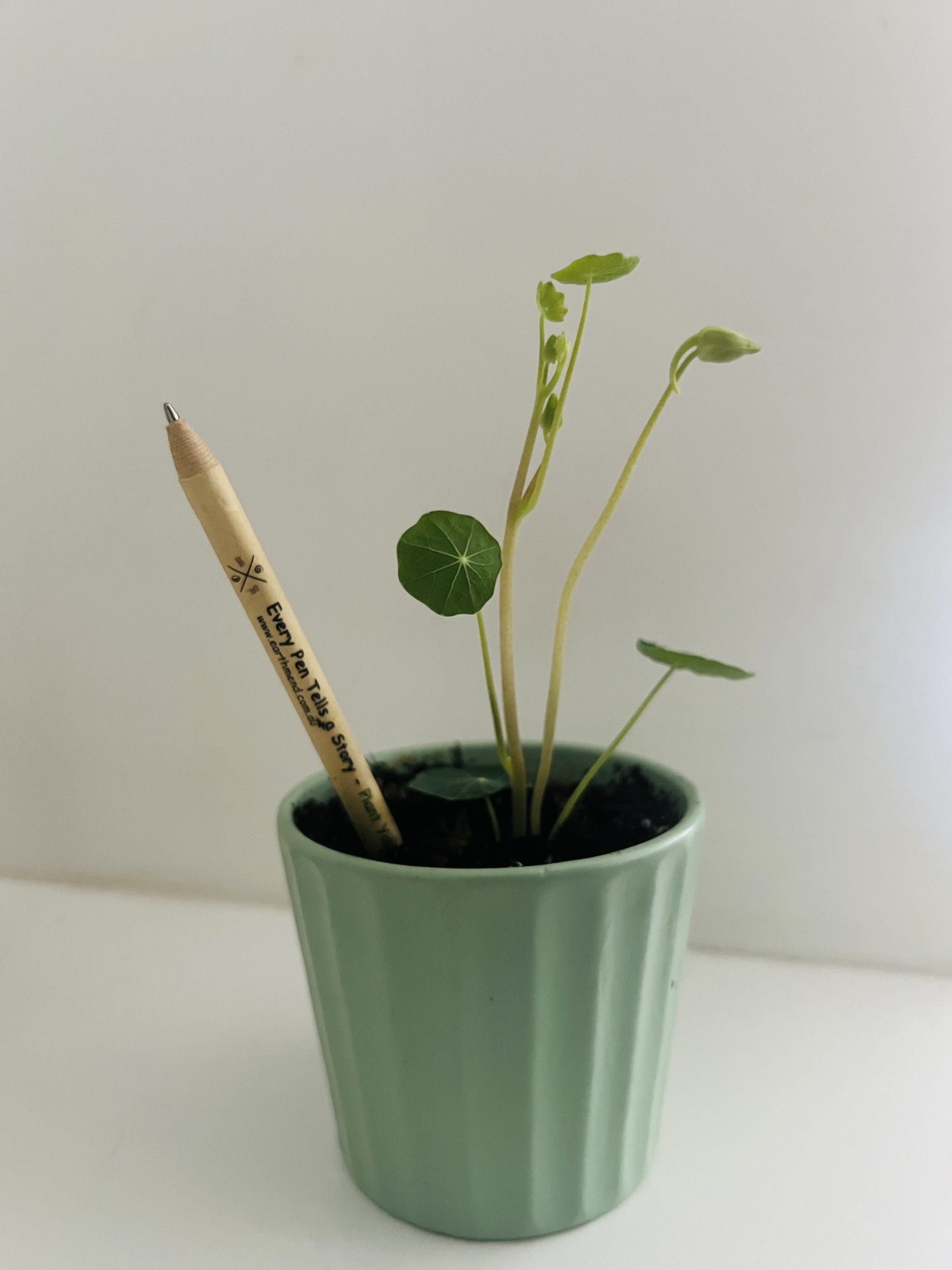
That question is where EarthMend began.
Give the everyday product a second purpose.
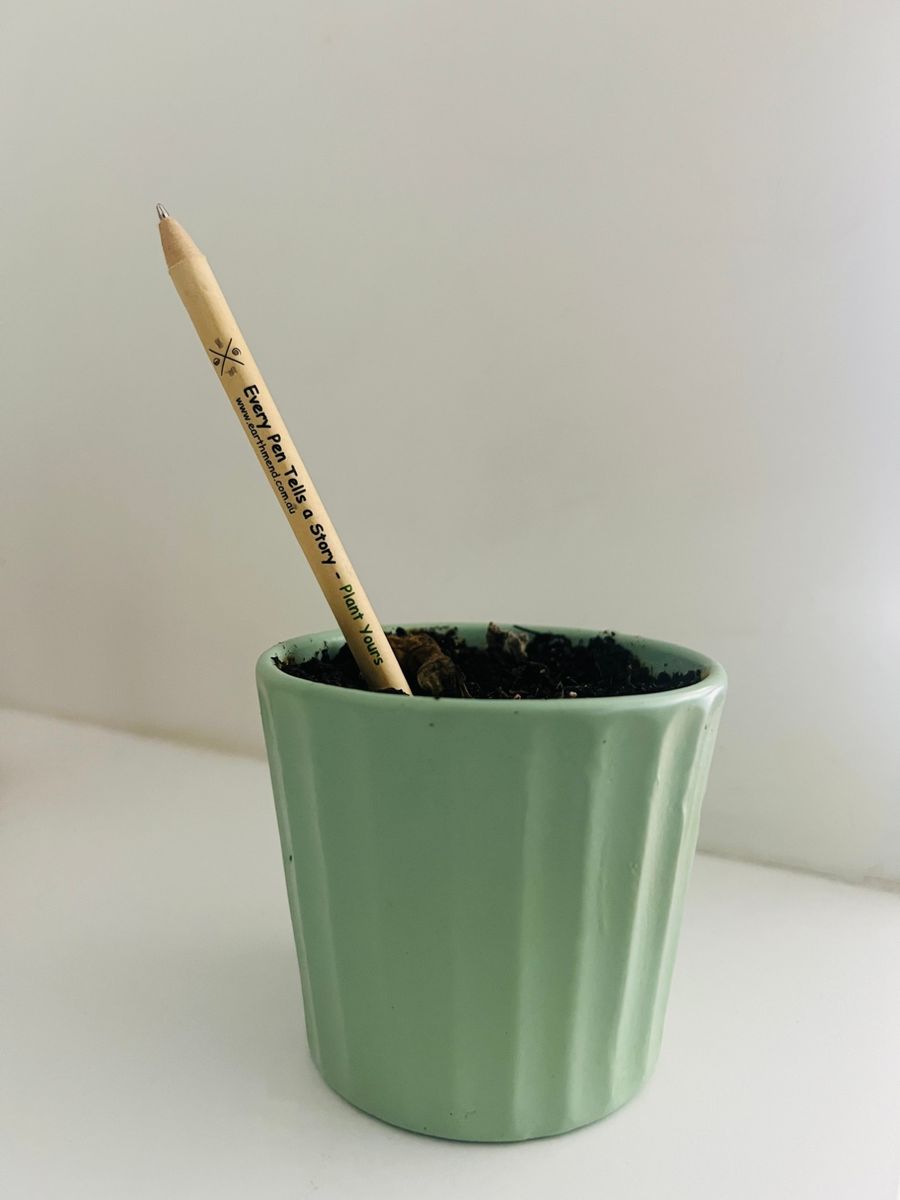
EarthMend was created around a simple idea: what if an everyday writing essential could have a life beyond its first use?
This is what happens after it's used.
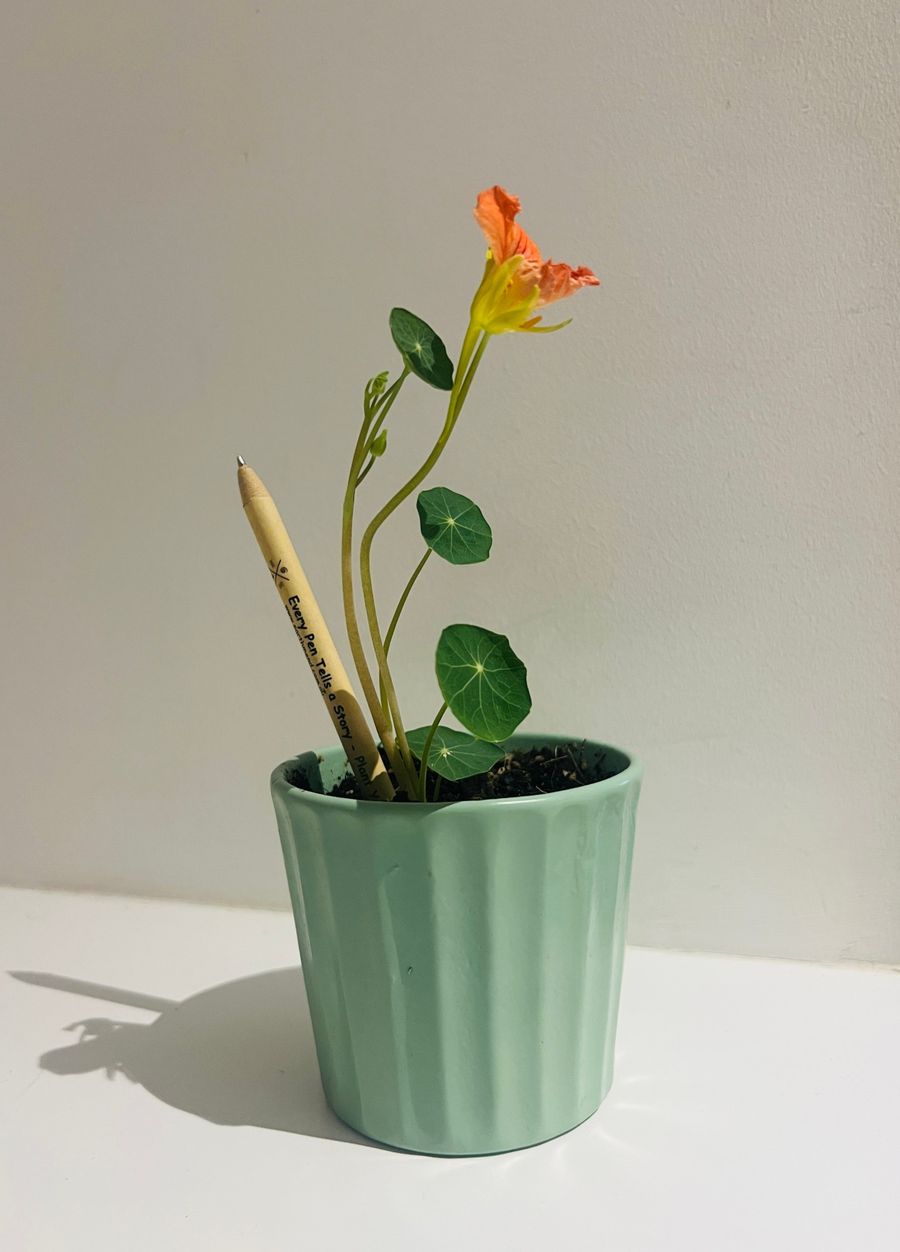
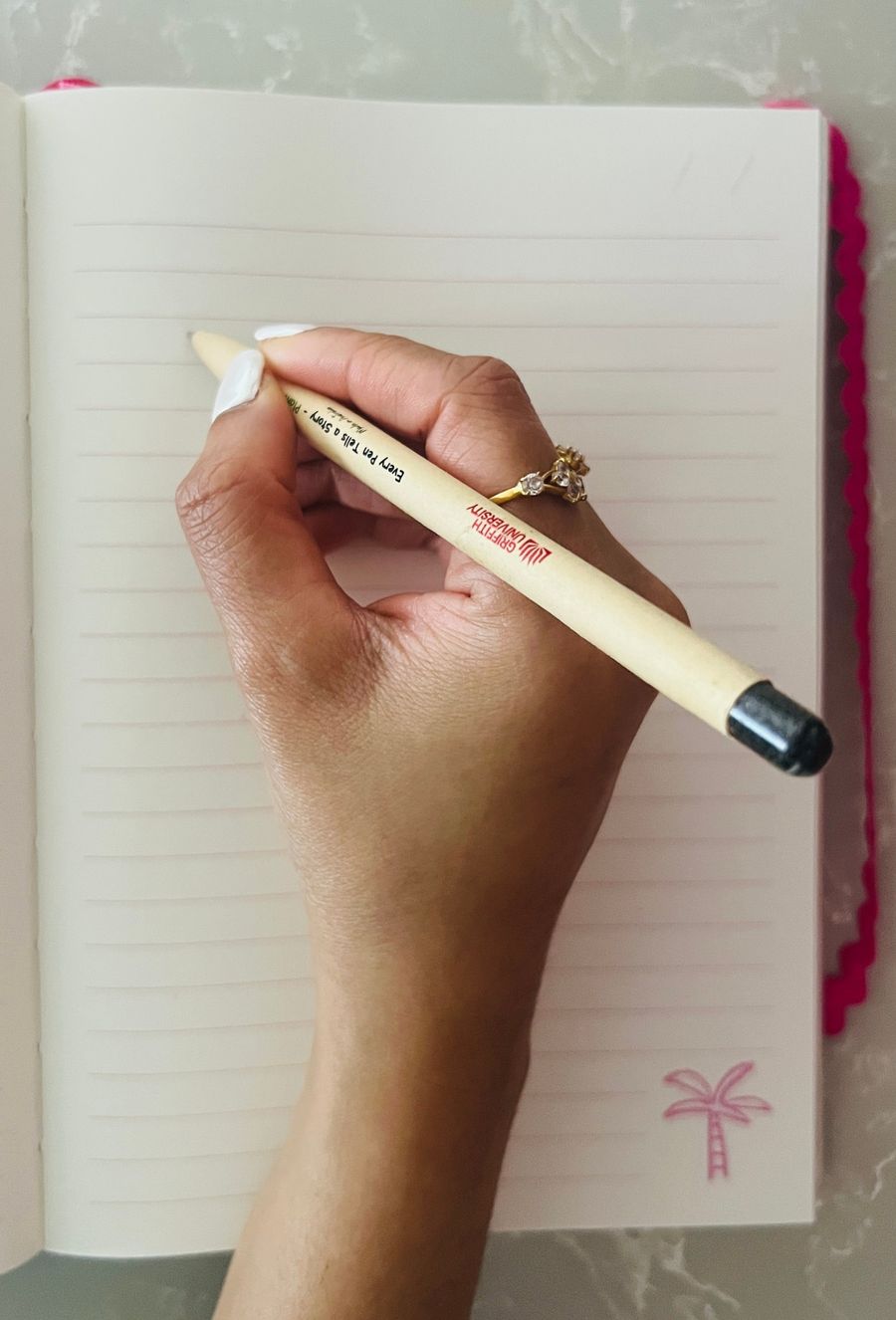
Write until the ink runs out. Plant the seed capsule. Give something new the chance to grow.
WRITE
Use the pen normally until the ink runs out.
PLANT
Remove the biodegradable seed capsule and gently plant it in suitable soil.
GROW
Give it suitable sunlight, water and time.
Choose Your Seeds
A look at the herb, flower, and vegetable and fruit varieties behind each seed option.
We believe sustainability starts with better questions.
Not perfection.
Not louder claims.
Just more thoughtful choices, made one product at a time.
Start with something small.
A better product can start with a better question.